



See Our Latest Posts and News
Access our FREE Articles and Learning Library of content
Leadership Never Goes Out of Style: Timeless Lessons Every Business Owner Should Know
Leadership, Company Culture, Strategy
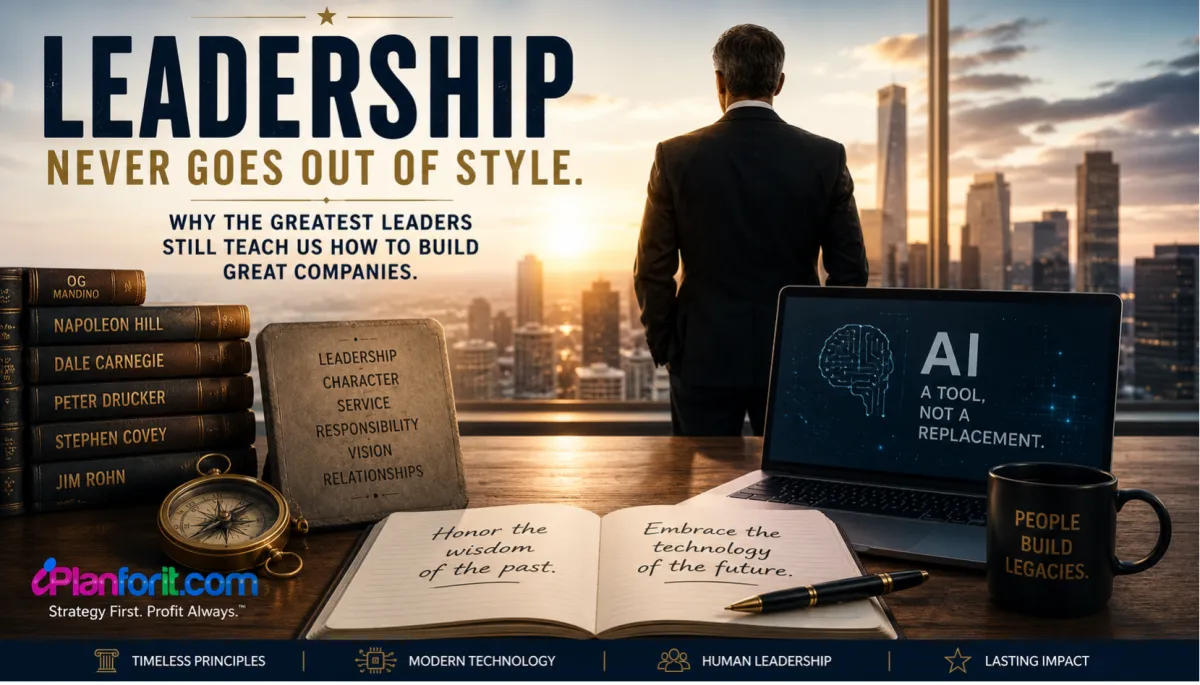
Leadership Never Goes Out of Style
Why the Greatest Leaders Still Teach Us How to Build Great Companies
"Technology changes. Human nature doesn't."
Every few years, someone declares that leadership has changed forever.
First, it was computers. Then the internet. Then smartphones. Now it's artificial intelligence.
The tools have changed dramatically.
But after more than forty years of working alongside business owners, executives, entrepreneurs, and leadership teams, I've come to a different conclusion.
GREAT LEADERSHIP HASN'T CHANGED AT ALL
The greatest leaders in history built extraordinary organizations long before computers existed. Why? Because they understood something that technology can never replace:
People.
When I first entered the business world, there was no internet. No email. No Google. No smartphones. No AI.
Business was built face-to-face. Trust was earned over time. A handshake meant something. Your word mattered. Relationships were your greatest competitive advantage.
Today we have incredible technology that allows us to accomplish more than ever before.
But I've also noticed something: many leaders spend more time learning software than learning people.
That has never been a winning strategy.
I've spent much of my life studying the great thinkers who shaped leadership long before our modern business world: Og Mandino, Napoleon Hill, Dale Carnegie, Peter Drucker, Stephen Covey, Jim Rohn. Their books remain on my shelf because they understood timeless principles that still determine success today.
Those principles haven't changed.

Leadership
People follow leaders who create clarity, confidence, and direction. Technology can organize information. It cannot inspire people.
Character
Your reputation is built one decision at a time. Integrity compounds just like interest. Once lost, it is incredibly difficult to recover.
Service
The best leaders don't ask, "How can people help me?" They ask, "How can I help my people succeed?" When leaders serve first, organizations become stronger.
Responsibility
Great leaders accept responsibility before assigning blame. They understand that accountability begins with the person in the mirror.
Vision
Every successful company begins with someone willing to see tomorrow before anyone else can. Vision gives people hope. Hope creates momentum. Momentum creates results.
Relationships
Business has always been built on relationships. AI can help you communicate faster. It cannot build trust for you. Trust is still earned person by person. Conversation by conversation. Promise by promise.

What History's Greatest Leaders Teach Us
Styles of management come and go. We rebrand them "servant leadership," "agile leadership," "founder mode," but underneath the buzzwords sits the same essential work: setting direction, earning trust, and helping people do their best work together. That work never becomes obsolete, because every organization, no matter how advanced its tools, still depends on people choosing to follow someone's lead.
When we study leaders like Nelson Mandela, Indra Nooyi, or Warren Buffett, we're not just learning history. We're learning a playbook that maps directly onto building a company today:
Clarity of purpose — a mission so clear that people know what to do even when the leader isn't in the room.
Consistency of values — acting in line with stated principles, especially when it's inconvenient or costly in the short term.
Investment in people — treating talent as the organization's greatest strategic asset, never a line item to be squeezed.
A visionary product can win attention for a season. A visionary leader builds the systems, norms, and teams that keep delivering long after the first launch.
Technology is an amplifier of leadership, not a substitute for it. Strong tools in weak hands rarely build strong companies.
This is why I believe the future belongs to leaders who combine timeless principles with modern technology.
At iPlanForIt, we embrace AI because it helps businesses become more productive, more profitable, and more efficient. But technology will never replace character. It will never replace service. It will never replace leadership.
Those qualities remain the foundation of every great company I've ever seen.
The tools may change. The principles never will.

My Perspective
After more than four decades in business, I've come to believe that the greatest competitive advantage isn't AI. It isn't capital. It isn't marketing. It isn't even strategy.
It's the kind of leader you choose to become.
I've watched companies rise because their leaders built trust, developed people, honored their commitments, and never stopped learning. I've also watched companies fail, even when they possessed every technological advantage imaginable, because they forgot that businesses are ultimately built by people.
For all the novelty in our devices and platforms, the people using them are driven by the same needs that shaped workplaces a century ago: the desire to be respected, to belong, to grow, and to contribute to something that matters. Great leaders design their companies around those truths, not around whatever trend is loudest that year.
As we step into one of the most technologically advanced periods in history, my hope is that we never leave behind the principles that brought us here.
Honor the wisdom of the past. Embrace the technology of the future. Never forget the human being.
In a world obsessed with what's new, the wisest leaders quietly double down on what has always worked: earning trust, telling the truth, and helping people do work they're proud of.

Driving Growth, Amplifying Impact

CHOOSE HOW YOU WANT TO WORK WITH US
BUILD A STRONGER, MORE VALUABLE BUSINESS.
We uncover hidden profit opportunities, reduce unnecessary expenses, strengthen operations, implement AI strategically, and help owners build more profitable, valuable, and transferable companies.
Our mission is simple: help business owners turn untapped potential into stronger performance, sustainable growth, and greater long-term enterprise value.