



See Our Latest Posts and News
Access our FREE Articles and Learning Library of content
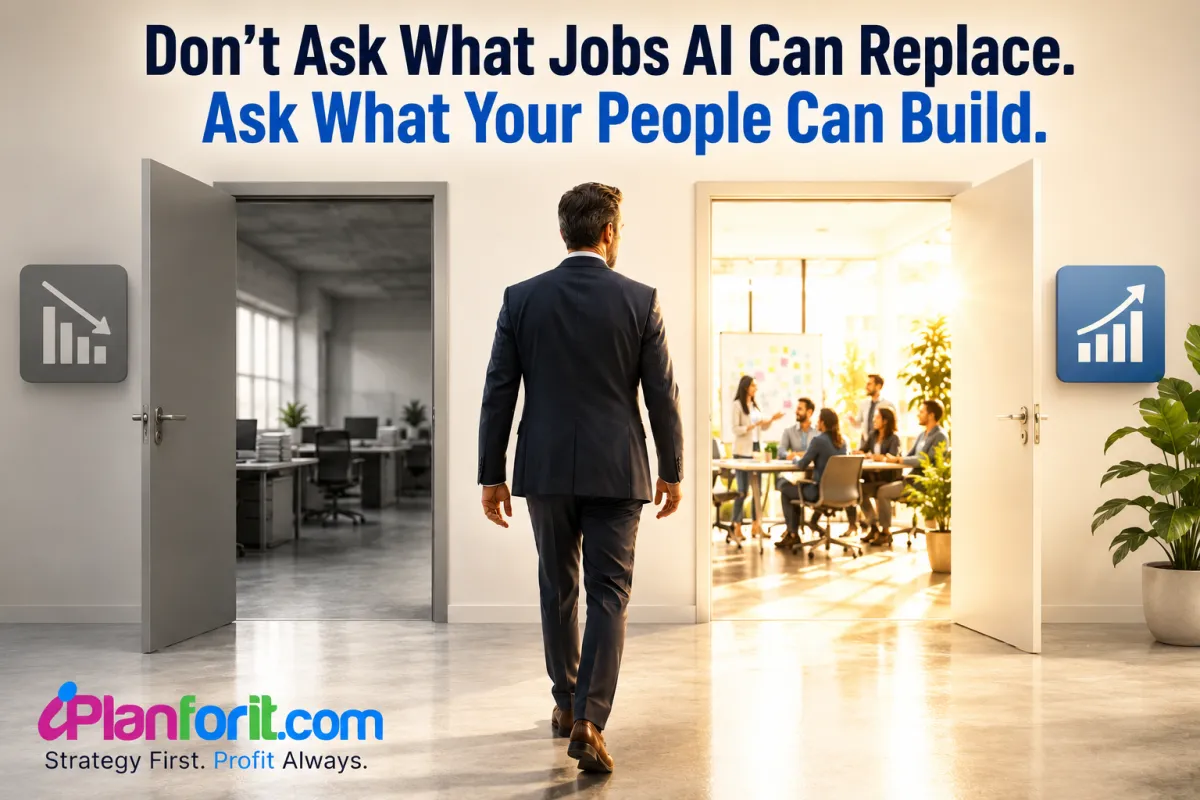
The CEOs Winning With AI Are Asking a Different Question
Don't Ask What Jobs AI Can Replace. Ask What Your People Can Build.
Every CEO right now is asking the same question about AI. It happens to be the wrong one.
The companies winning with AI right now aren't the ones cutting the most jobs. They're the ones asking a completely different question than everyone else in the room.
The Fear Every CEO Is Sitting With Right Now
I've had this conversation with more business owners in the last year than almost any other single topic. Underneath the strategic language, there's usually a simpler, more anxious question at its center: is AI going to make my people unnecessary?
It's a fair question to have. AI genuinely can handle work that used to require a person, and pretending otherwise would be dishonest. But the fear itself is pointing CEOs toward exactly the wrong first move.

The Wrong Question Almost Everyone Starts With
Most leadership teams approach AI the same way: how many roles can this technology eliminate, and how quickly can we capture the savings?
That question isn't unreasonable on its face. Cost reduction is a legitimate business goal. But it's an incomplete question, and answering it first, before asking anything else, tends to produce the same narrow outcome every time: a smaller payroll, a short-term efficiency win, and very little strategic thinking about what actually comes next.
What a Major Retailer Got Right
A large European retail group recently rolled out an AI chatbot to handle a significant share of its customer service calls. The technology worked well. Wait times dropped. Customer satisfaction improved. The company saved a meaningful amount of money in the process.
Here's the part that matters more than the chatbot itself. Instead of using those savings to eliminate the roughly 8,500 employees whose call volume had just been absorbed by the AI, the company looked closely at what customers were still asking for that the bot couldn't provide. What they found was a substantial, unmet demand for personalized design help. They retrained those employees into a premium design service instead of laying them off.
That new service line generated well over a billion dollars in revenue within its first year, and the company projects it will continue to grow as a meaningful share of total revenue in the years ahead.
The AI didn't just cut costs. Used strategically, it revealed an entirely new business the company didn't know it had permission to build.
The Lesson Hiding Inside a Cautionary Tale
Contrast that with a well-known fintech company that took the opposite approach. It deployed an AI agent to handle millions of customer conversations a month, dramatically cutting resolution times, and initially projected tens of millions in profit from the labor it replaced.
Within a year, the company was quietly rehiring. The AI handled routine questions fine. It struggled badly with sensitive situations, especially anything involving billing disputes or real financial stress, where customers needed to feel heard by an actual person, not processed by an algorithm. The reputational damage showed up fast, on social media and public review platforms, and the company eventually acknowledged publicly that speed from AI has to be paired with empathy from real people.
Roughly half of companies that swap people out for AI end up in some version of this same boomerang, rehiring at greater expense than if they'd never made the cut in the first place.
The Leadership Principle Underneath Both Stories
I think about this contrast through the lens of something I first encountered years ago in the story of a manufacturing company that survived a brutal economic crisis without mass layoffs. Facing a sudden liquidity freeze that crushed most of its competitors, that company's leadership didn't start with headcount reduction. They gathered their people, opened the books, and asked everyone, executives included, to take a temporary pay cut while they figured out together how to keep as many jobs intact as possible. Some departments were even spun off as independent businesses run by the very employees who had led them internally, so the skills and relationships already built didn't simply disappear.
The specific tactics were different from the retail story. The underlying leadership instinct was identical: treat your people as a source of value to be redirected, not a cost to be eliminated the moment technology or circumstance makes it possible.
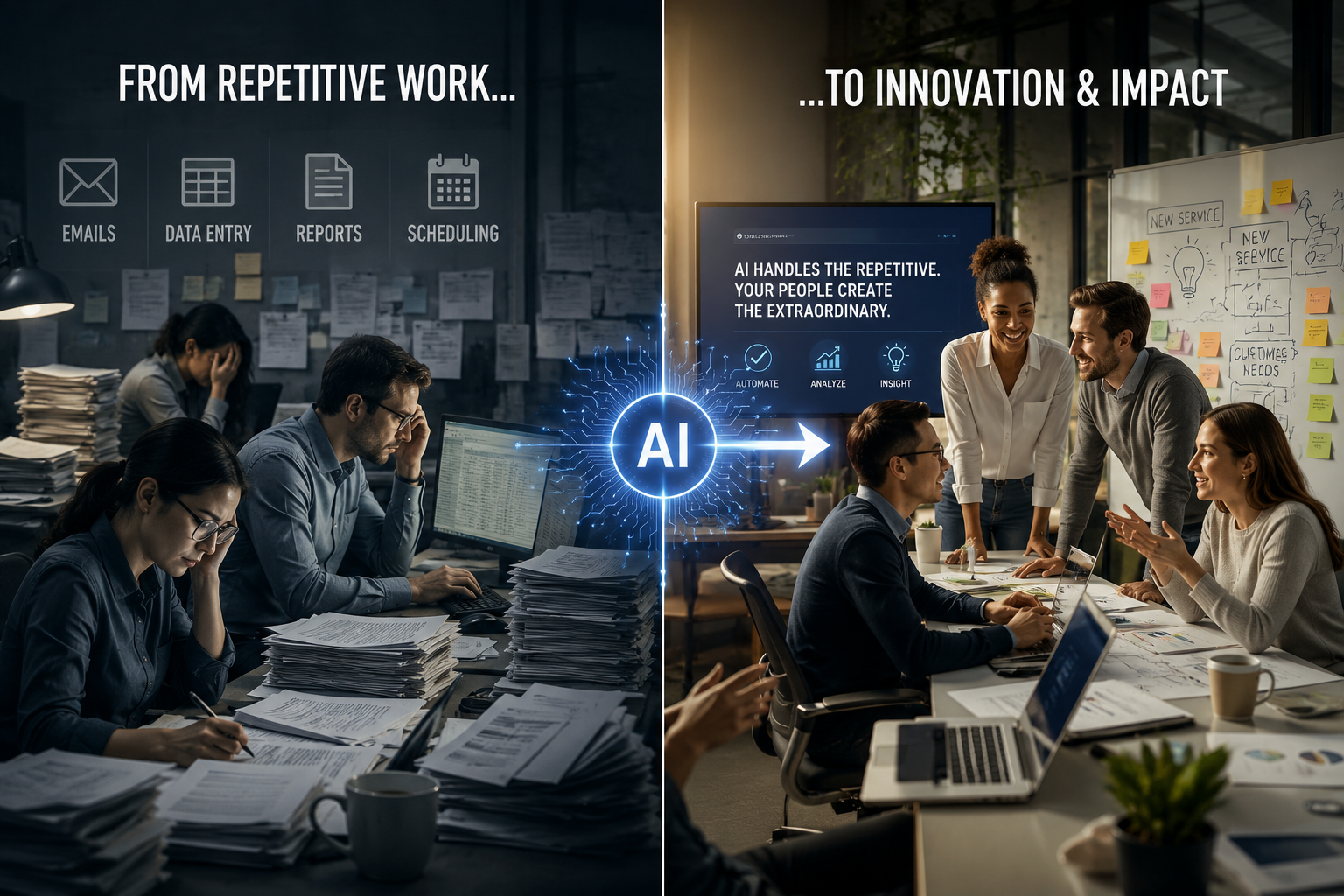
AI should create capacity. Leadership is what turns that capacity into opportunity. Those are two different jobs, and many CEOs only do the first.
What Every Business Owner Should Actually Do
Start by mapping the genuinely repetitive work in your business: scheduling, data entry, routine emails, first-draft reports, and basic customer questions that don't require real judgment. That's where AI belongs first, not as a replacement for your people, but as a replacement for the parts of their jobs that were never the best use of their talent to begin with.
Then look closely at what your customers are still asking for that no algorithm can fully deliver. That gap is usually where the next real opportunity hides, just as it did inside a chatbot's unanswered questions for that retailer.
Retrain ahead of the disruption, not after it's already forced your hand. Build the new revenue line before you're desperate for one. And measure your AI strategy by what it makes possible, not just by what it lets you cut.
Don's Perspective
I've spent over forty years telling business owners the same thing in a hundred different contexts: strategy first, profit always. AI hasn't changed that philosophy. It's just handed us a new lever to pull.
Technology without strategy produces expensive automation and very little else. Strategy applied to technology produces new profit, new capability, and often an entirely new business you didn't know you had the ingredients for. The future belongs to companies that use AI to elevate their people, not eliminate them. The greatest return on AI was never a smaller payroll. It's unlocking the value that was sitting right there in your team the whole time, buried under work that never should have been theirs to do in the first place.
Five years from now, the companies that thrive won’t be remembered for how many people they replaced with AI.
They’ll be remembered for what their people became capable of building.
Don Miller ~ Founder & CEO ~ iPlanForIt.com
🔗iplanforit.com/strategy-call-15min
Strategy First. Profit Always.

Driving Growth, Amplifying Impact

Unleash Your Business Brilliance.
I believe every business has untapped potential.
My mission is to help business owners uncover it, accelerate growth, increase profitability, and build more valuable, scalable, and future-ready companies.