



See Our Latest Posts and News
Access our FREE Blog and Learning Library of content
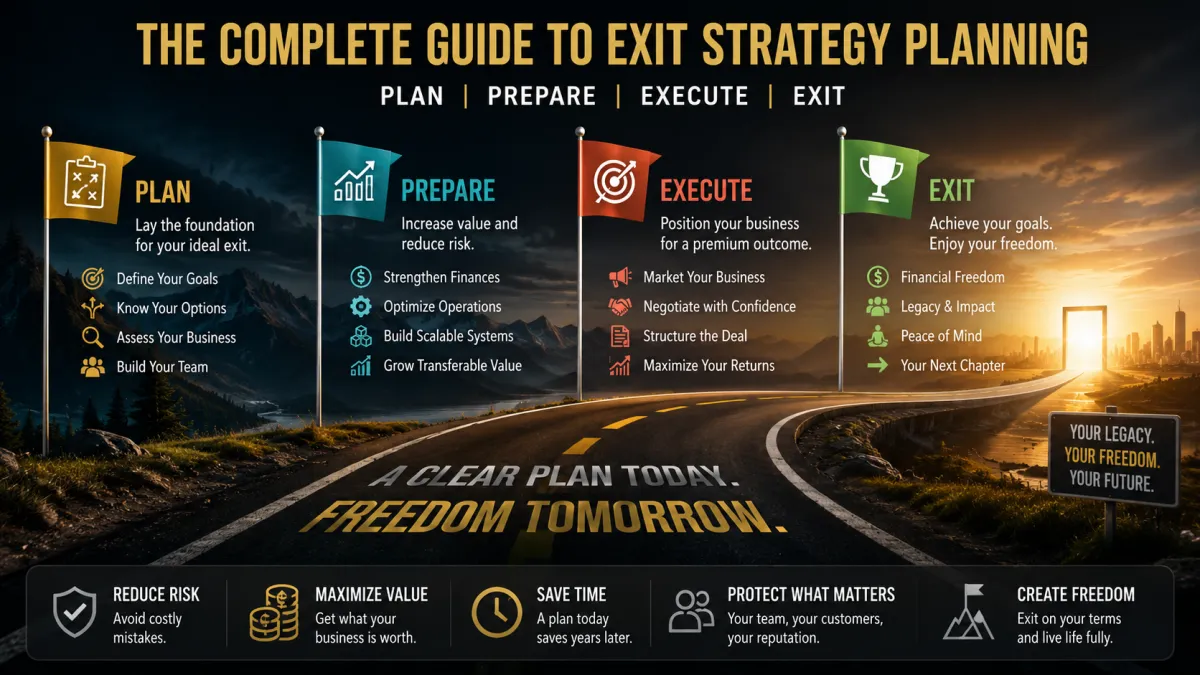
What is an Exit Strategy and Why Does it Matter?
By Exit Strategy Experts @iPlanforit
Plan Your Business Exit for Maximum Profit
The average business owner spends years building their company, but almost no time planning how they will leave it. Yet the exit is often the single largest financial event of an entrepreneur's life.
An exit strategy is a carefully designed plan that outlines how a business owner will transition out of their company, whether through a strategic sale, management buyout, family succession, or merger, while maximizing financial return and preserving their legacy.
The stakes are enormous. According to data from the Exit Planning Institute, roughly 73% of privately held U.S. businesses plan to transition ownership within the next decade, representing a staggering $14 trillion market shift and opportunity. Yet most owners start planning far too late or not at all.
73% Of private businesses plan to transition within 10 years.
49% Of owners plan to exit within 5 years.
20% Of businesses listed for sale actually find a buyer.
The Cold Hard Truth: 4 out of 5 businesses put on the market fail to sell. This isn't because the companies lack value, but because the owners failed to prepare them for a sale that is transferable.
The 5 Most Common Exit Strategy Types
Choosing the right exit path depends on your financial goals, timeline, desire for legacy, and how involved you want to remain post-transition.
Here are the five strategies most business owners consider:
1. Strategic Sale to a Third Party
The most lucrative route for growing businesses. Strategic buyers—often competitors or larger firms seeking market expansion—frequently pay premium valuation multiples because they see immediate operational synergies. This path requires extensive preparation but yields the highest payout.
Timeline: Expect 12–24 months of strict market preparation.
2. Management Buyout (MBO)
Your existing management team purchases the business, often using a combination of equity and debt financing. MBOs offer business continuity and culture preservation.
The Tradeoff: Valuations are typically lower, and you may be required to offer seller financing (carrying a note).
3. Family Succession
Passing the torch to a family member or a close associate. While 54% of owners prefer this route, fewer than 30% of family businesses survive into the second generation. An ironclad succession plan involving legal, tax, and corporate governance frameworks is non-negotiable.
4. Employee Stock Ownership Plan (ESOP)
ESOPs allow your employees to gradually purchase the company through a trust, creating a built-in buyer while maintaining company culture. They offer extraordinary tax advantages for both owner and corporation, though valuations tend to be conservative due to federal fiduciary requirements.
5. Merger or Acquisition (M&A)
Merging with or being acquired by a complementary firm can instantly scale your legacy. In tech and professional services, "acqui-hires" where a buyer acquires your business primarily to absorb your high-performing talent and proprietary systems, remain highly common and lucrative.
When Should You Start Planning Your Exit?
The single most common mistake business owners make is waiting until they are burnt out to sell. Exit planning is not a transaction; it is a multi-year process. Research consistently shows that owners who begin planning 5–10 years before their intended exit achieve drastically superior deal structures, higher valuations, and lower tax liabilities.
Timeframe Key Focus Areas
5–7 Years Out - Foundation building: Documenting operational systems, building management depth, locking in recurring revenue.
3–5 Years Out - Value maximization: Financial optimization, customer de-risking (diversification), IP protection.
1–3 Years Out - Market preparation: Comprehensive financial audits, assembling your M&A advisor team, initial buyer mapping.
12 Months Out - Deal execution: Confidential marketing, due diligence readiness, and structure negotiations.
What Every Owner Needs to Know: The "Owner's Trap"
Buyers do not want to buy a business that depends entirely on the owner's brain, relationships, or 60-hour work weeks. If your business cannot run seamlessly without you for 30 days, you don't own an asset; you own a job.
To maximize your profit, you must eliminate Customer Concentration (no single client should represent more than 15% of your revenue) and build an autonomous leadership team.
Questions Every Owner Must Answer Before Exiting
■ What do I want to happen to my business after I leave?
■ How much money do I need to fund my post-exit lifestyle?
■ Who are the right buyers or successors for my company?
■ How will I minimize taxes on the sale proceeds?
■ What happens to my employees when I sell?
■ Am I emotionally ready to step away from my business?
■ Is my business truly sellable without me running the daily operations?
Pro Tip: Roughly 3 out of 4 business owners report profoundly regretting their sale within one year of exiting. The antidote is comprehensive planning across three distinct pillars: financial, operational, and emotional.
The Three Pillars of a Successful Exit
Business Readiness
Is your company operationally mature? Buyers pay premium multiples for businesses with documented operating procedures (SOPs), clear financial books, and a diversified customer base.
Personal Financial Readiness
Do you know your "Wealth Gap"? You must calculate the exact minimum net proceeds from the sale to fund your lifestyle, factoring in taxes, inflation, and estate planning.
Personal Readiness
Exiting a business you built from scratch is deeply emotional. Owners who have a clear, exciting vision for "What's Next" navigate the transition successfully. Those who don't often sabotage their own deals.
Build Something Worth Leaving
Whether your exit is two years away or twenty, the best time to begin planning is now. Every improvement you make to your business's systems, financials, and leadership team doesn't just increase its eventual sale price; it also makes it a more profitable, enjoyable, and automated business to run right now.
Exit planning isn't about giving up; it's about building something worth leaving behind.
Let's Maximize Your Life's Work
You’ve poured blood, sweat, and years into building your business. Don't leave your final payout and your legacy to chance. At iPlanforit, we specialize in helping business owners systematically de-risk their operations, drive up their valuation multiples, and architect lucrative, seamless exits.
Whether you want to sell to a strategic buyer, transition to your team, or step back into a chairman role, we ensure you exit on your own terms and maximize your profit.
Your exit strategy starts today.
👉 Click here to book a confidential, free 15-minute Strategy Call with iPlanforit. Let's figure out what your business is worth, and exactly how to double that number before you walk away.
STRATEGY FIRST! LEGACY SECOND! PROFIT ALWAYS!
© 2026 Exit Strategy Experts. For informational purposes only. Consult qualified legal, financial, and tax advisors before making any exit planning decisions.

Driving Growth, Amplifying Impact

Unleash Your Business Brilliance.
I help serious business owners and organizations generate more clients, close more sales, and increase their overall revenue and profits quickly and inexpensively